Other Writing
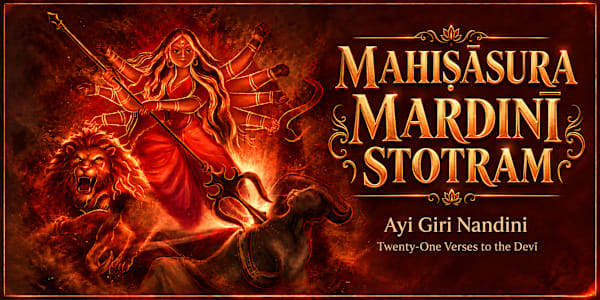
The Mahiṣāsura Mardinī Stotram, known by its opening words “Ayi Giri Nandini”, is a celebrated twenty-one-verse hymn in praise of Devī Durgā as the slayer of the buffalo-demon Mahiṣāsura. Each verse is a rush of rhythmic epithets and sound-play, and each ends with the same triumphant cry: “jaya jaya he mahiṣāsuramardini ramyakapardini śailasute” (“Victory to You, O slayer of Mahiṣāsura, O Lady of the beautiful braid, O daughter of the mountain!”). The hymn sings of the Mother as the daughter...
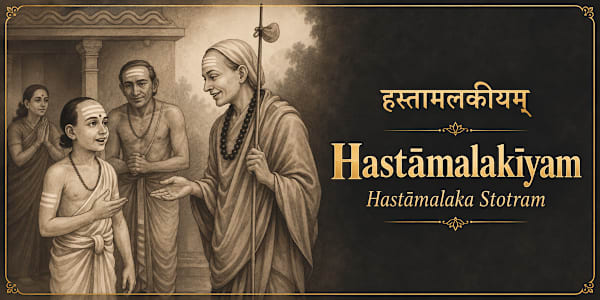
Hastāmalakīyam is the thirteen-verse declaration of the boy Hastāmalaka, a child thought to be dumb who was brought to Ādi Śaṅkarācārya at Śrībali in Karnataka. When Śaṅkara asked, “Who are you?”, the boy answered at once. He is not a man, a god, a caste or a stage of life, but the Self, pure and ever-present awareness. He explains this through images: the Sun that lights the world while remaining one, the face and its reflection in a mirror, one Sun seen in many water-pots, and the Sun...
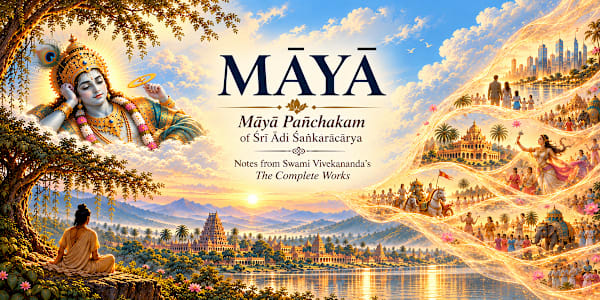
Māyā Pañcakam is a five-verse hymn attributed to Ādi Śaṅkarācārya, and each verse ends with the same refrain: “Māyā, most skilled at making the impossible happen.” For Śaṅkara, Māyā is the power of Brahman by which the one non-dual reality appears as a world of many names and forms. It is neither fully real nor fully unreal. It veils the Self and projects a world of difference upon it, as a rope is mistaken for a snake. Right knowledge from a teacher removes the veil. Swami Vivekananda’s view...
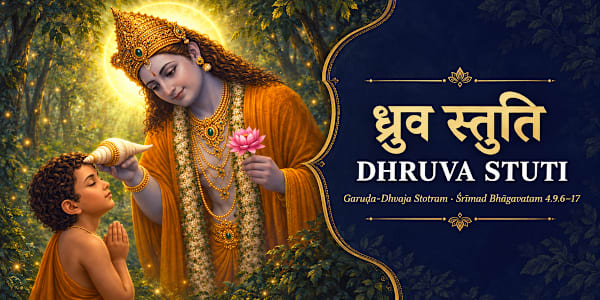
Dhruva Stuti is the twelve-verse prayer of the child Dhruva, found in the fourth canto of the Śrīmad Bhāgavatam (4.9.6–17) and also known as the Garuḍa-Dhvaja Stotram. Hurt at being denied his father’s lap, five-year-old Dhruva (the source says six) took his mother Sunīti’s counsel and walked into the forest. There Nārada gave him the Nārāyaṇa mantra, and after months of austerity the Lord appeared. Dhruva stood speechless before Him, and the Lord touched his forehead with His conch, which...
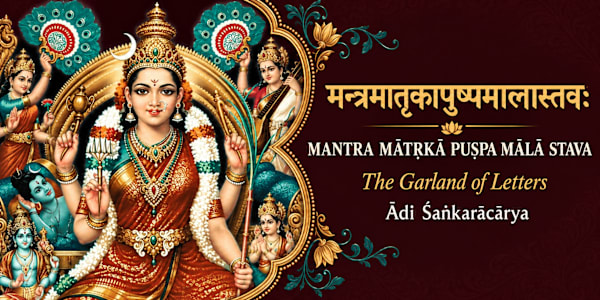
Mantra Mātṛkā Puṣpa Mālā Stavam is a seventeen-verse hymn attributed to Ādi Śaṅkarācārya, written as a mānasa-pūjā: worship performed entirely in the mind. The devotee imagines the Divine Mother seated on a jewelled throne in Maṇidvīpa, the island of gems in the ocean of nectar. Then, verse by verse, the devotee offers her water, a bath, garments, ornaments, fragrance, flowers, incense, lamps, food, betel and ārati. The “flowers” of this garland are the letters of the Sanskrit alphabet...
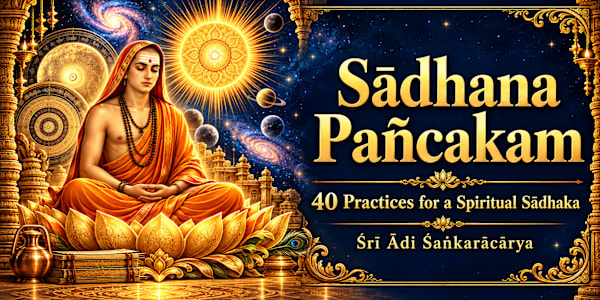
Sādhanā Pañcakam is a five-verse manual of spiritual life attributed to Ādi Śaṅkarācārya. Each verse holds eight short instructions, all ending in “-tām” (“let it be done”), which together make forty practical steps. They begin with daily study of the scriptures and the offering of one’s duties as worship. They continue through devotion, the company of the wise, and service to the Guru. Then come hearing, reflection and deep contemplation of the Upaniṣadic truth, followed by austerity,...
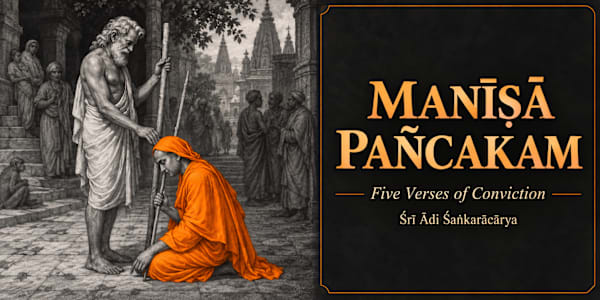
Maṇīṣā Pañcakam is a hymn of five verses by Ādi Śaṅkarācārya, born of a famous encounter on the road to Kāśī. When a Chaṇḍāla, an outcaste, stood in his path, Śaṅkara asked him to move aside. The man answered with two piercing questions: do you want the body made of food to move away, or the consciousness within? And is there any difference between the sun reflected in the Gaṅgā and in a gutter? Recognising the Lord himself in that form, Śaṅkara replied with these five verses. Each closes...
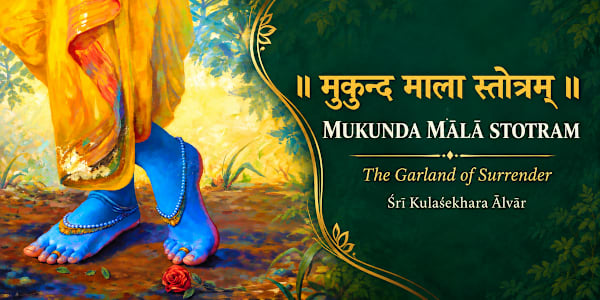
The garland of surrender, by Śrī Kulaśekhara Ālvār.
Mukunda means “the one who grants liberation,” and this stotram is a garland of devotion offered to Lord Kṛṣṇa by Kulaśekhara Ālvār, the Chera king of Kerala who set aside his crown for a life of bhakti. Across 40 verses he asks for one boon: never to forget the Lord’s lotus feet, in any birth and in any state. He sings of the Lord’s names as the surest medicine for saṃsāra, of the boat of devotion that carries us across the ocean of worldly...
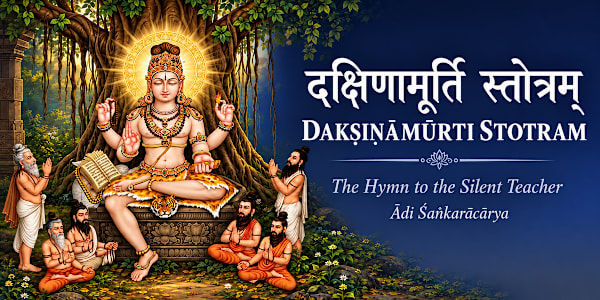
Under a banyan tree sits Dakṣiṇāmūrti, a youthful Guru surrounded by aged disciples. He teaches the highest truth in silence, and their doubts dissolve. In ten verses, Śaṅkarācārya sings of the world as a city seen in a mirror and a sprout within a seed. He sings of the Self that shines unchanged through waking, dream and deep sleep, and of the Lord who appears as the whole universe. The hymn closes by promising that hearing, reflecting on and reciting it brings the Self-knowledge it...
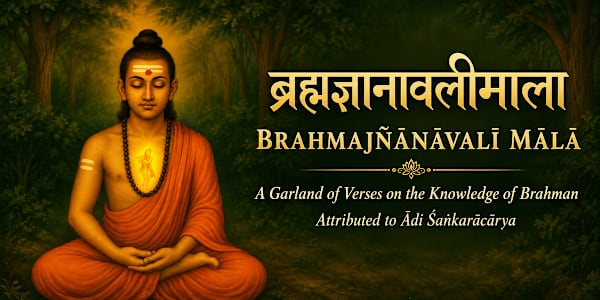
A garland of verses on the knowledge of Brahman, traditionally attributed to Ādi Śaṅkarācārya.
In just 21 verses, this short Advaita Vedānta text keeps returning to one truth: the Self is Brahman, pure, infinite and unchanging consciousness, and not the body, the senses or the mind. Its refrain, ahameva aham avyayaḥ (“I alone am I, the imperishable”), makes it a compact manual for daily contemplation. The closing verses sound the “drum-beat of Vedānta”: the seer is Brahman, the seen is māyā,...
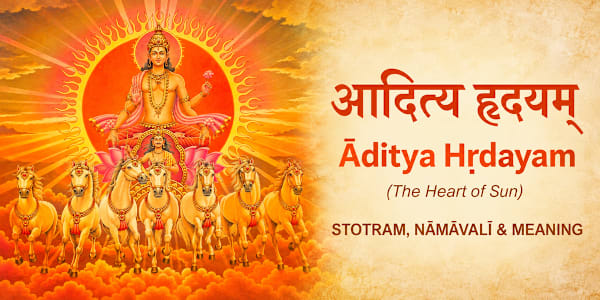
The Āditya Hṛdayam is a hymn to the Sun God, found in the Yuddha Kāṇḍa of Vālmīki’s Rāmāyaṇa, in sarga 105 and comprising 31 verses. On the battlefield, Rāma stands weary and thoughtful before Rāvaṇa, and the sage Agastya comes to teach him this “eternal secret” to win the fight. Agastya presents the Sun not as a mere star but as the Supreme Being. He is the Self of all gods, the source of light, knowledge and life, and the sustainer, dissolver and witness of the world. Its core teaches that...
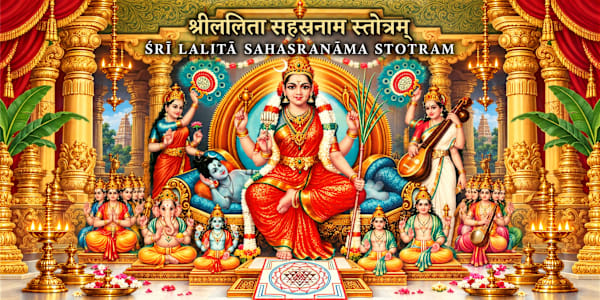
The Lalitā Sahasranāma is a hymn of a thousand names of the Divine Mother, Lalitā Tripurasundarī, found in the Brahmāṇḍa Purāṇa. It is presented as a dialogue in which the horse-headed Hayagrīva teaches the sage Agastya, and the names themselves were spoken by the Vāc Devatās, goddesses of speech. The names run from her form, crown to feet, through her battle against Bhaṇḍāsura and her place in the Śrī Cakra, to the subtle Kuṇḍalinī and her formless, attributeless nature. Its 183 verses carry...
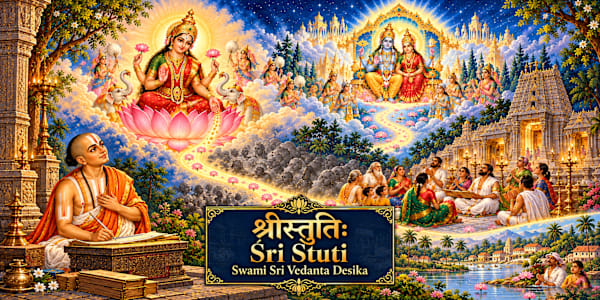
Śrī Stuti is a hymn of twenty-five verses in praise of Mahālakṣmī, composed by Śrī Vedānta Deśika (Veṅkaṭanātha), the great Śrī Vaiṣṇava teacher of the 13th century, who is known as Kavitārkikasimha, the lion among poets and logicians. This composition is also called the Kanakadhārā Lakṣmī Stavarāja, because it is said to shower wealth on those who recite it. An associated story tells of a poor young brahmacārī who had finished his Vedic studies but could not marry because he had nothing....
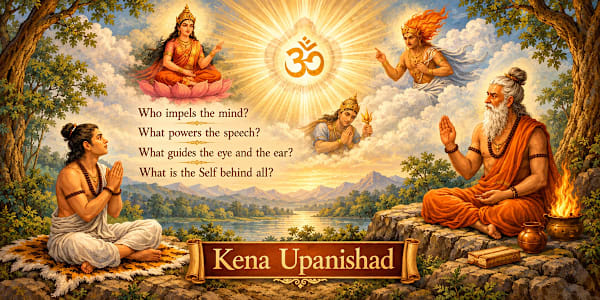
The core teaching of the text is motivated from the first verse as a question from the disciple : Directed by whom does the mind go toward its objects? By whom is the vital force (prāṇa), the foremost, set into motion? By whose will do people speak this speech? Who is the Deva, the luminous intelligence, that connects the senses to perception?
The Amṛtabindu Upaniṣad is a short text from the Atharvaveda (22 verses) that belongs to the family of 20 Yoga Upaniṣads, though what it actually teaches is closer to Advaita Vedānta than to physical yoga practice. Amṛta means "deathless" and bindu means "drop", so Amṛtabindu means "a drop of immortality". Bindu is also usually referred to as the source or culmination of all things. Amṛtabindu could also mean that source where deathlessness exists.
The core teaching revolves around a few ideas...
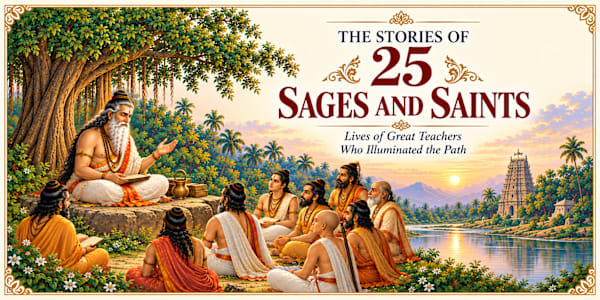
This book brings together the inspiring lives of twenty-five sages of ancient India, whose wisdom, devotion and unwavering commitment to dharma have illumined the path for countless generations.
Each story is a timeless source of inspiration, offering profound lessons on faith, humility, service, knowledge and devotion. May the lives of these great souls kindle in every reader a deeper love for Bhagavan and a stronger resolve to walk the path of righteousness